
Music
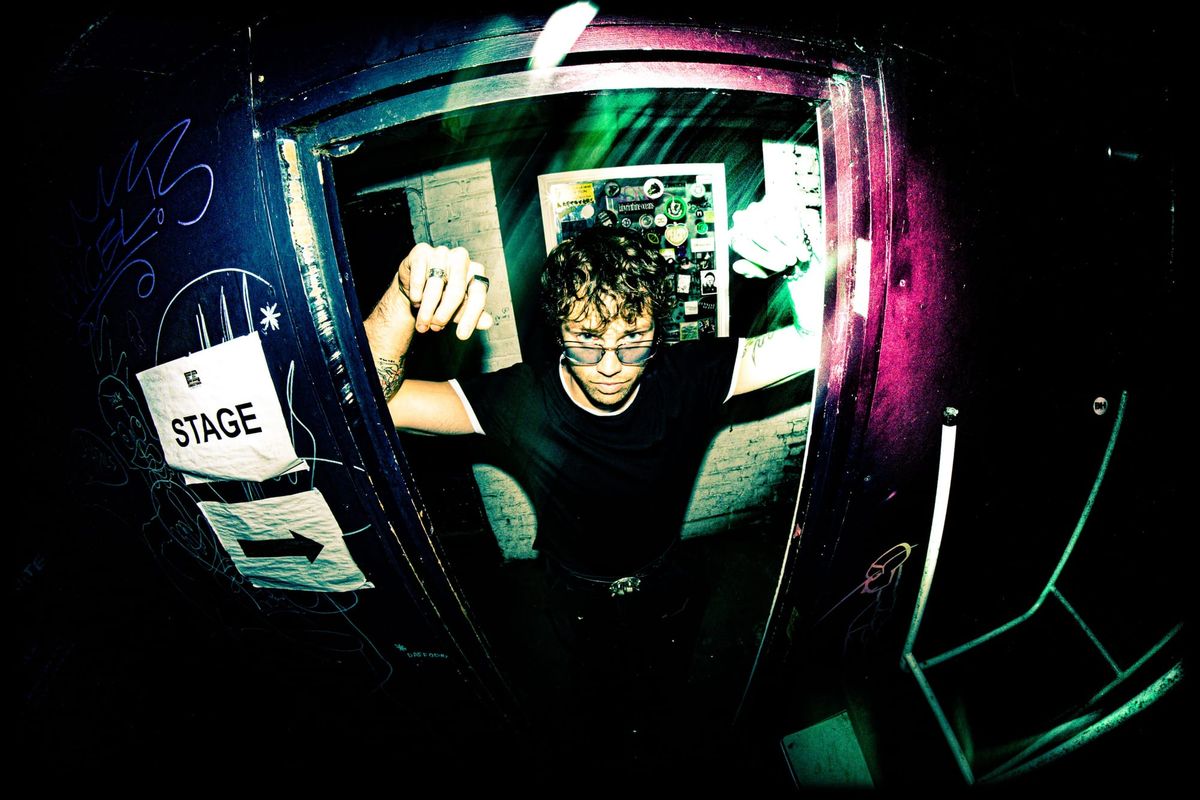
Every big rock band that’s come through London has been to Konk Studios: Depeche Mode, Franz Ferdinand, the Arctic Monkeys and the Stone Roses, to name a few.
Once a tobacco and confectionery warehouse, the building was purchased by The Kinks in 1973 and converted into a recording studio. Artists can record in Studio One or have their album mixed in Studio Two.
Now, another act has joined the studio’s legendary roster: Nodaway, the indie-rock project of singer, songwriter and producer Chris Jobe which returns after a nearly decade-long hiatus with the album 777 Seasons.
Jobe had no intention of reviving Nodaway — he’s since been releasing music as a solo artist — until fans reached out, telling him that a bad actor had spammed the Spotify page with AI slop.
He worked with his distributor to remove it and, in the process, found something else: Nodaway was still pulling in 30,000 monthly listeners.
“I had no intention of bringing Nodaway back until I saw how many fans there were,” Jobe says.
The discovery was serendipitous. The inspiration for the album was also full of synchronicities.
Jobe was riding a motorcycle in Costa Rica in 2024 when he was met with a “death wobble” — a sudden, forceful shaking of a bike’s handlebars and front wheel.
His bike flew from underneath him, causing him to slide nearly 30 feet, he says.
“My bike almost went over this ravine, and so did I.”
After evaluating his injuries, Jobe saw a truck drive past. Its license plate read “777.”
“777 was the first thing I saw after I got off that bike,” Jobe says. Eventually, more cars passed. A young boy on an ATV saw Jobe and offered him a ride into town.
When Jobe asked for his name, the boy responded: “Me llamo Ángel.”
“My name is Angel.”
Angel numbers and synchronicities continued to follow, from phone numbers to the address of the hospital where Jobe eventually ended up. It was in Costa Rica that Jobe met Daisy, a British-born creative and interior designer. It was that relationship that brought Jobe to London.
The synchronicities that followed Jobe now have a permanent home on the album. Each song has a corresponding angel number that summarizes its message.
Take track five, “555 Lonely Days.”
“555” is thought to mean that change is coming. “I experienced change here [in London] with a ton of loneliness,” Jobe says.
Jobe calls the album “the most cohesive” project he’s made while still offering variety across the songs themselves.
Each song was recorded live on analog tape at the recommendation of producer Miles Clinton James. The album’s cover art, a collage made by Coleman Gould, shows Jobe’s life between Los Angeles and London, including Konk Studios, London’s Southbank skate park, an old magazine clipping of Malibu and the infamous motorcycle.
“My job as an artist is to create a world worth living in. My secondary job is to find those people that want to live in it,” Jobe says.
777 Seasons is out now. Jobe will bring it to life further still with an album release show in Los Angeles on Sept. 12.
The cost of a ticket? $7.77.
Chris Jobe gives a shoutout to the musicians and engineers who worked on the album: "It wouldn't be anything without them."
Tracks 1–6
Drums: Tom Potter; Bass: Kieran Jones; Lead Guitar: Linus Taylor; Rhythm Guitar: Christopher Jobe; Keys & Piano: Benjamin Leuenberger; Vocals & Percussion: Christopher Jobe; Engineered by Matthew Jaggar, with assistant engineer George Chung.
Track 2
Vocal engineering and production by Scott Knapper.
Track 2 & 5
Strings arranged by Raymond Joseph Bracchitta. Viola, violin 1, and violin 2: Kyle Pudenz; Cello: Judah Groveman.
Tracks 1-3, 5-7
Mixed by Bobby Knepper. Track 4 mixed by Matthew Jaggar.
All Tracks: Written and produced by Christopher Jobe. Mastered by Harrison Tate.
Don't miss the next story: Subscribe to the Hollywood Rebound newsletter for free interviews and features on the artists shaping entertainment.