
Music
[This story is also available as a podcast.]
Anne Hathaway has played many roles. In one of her latest, she takes on the character of pop star Mother Mary for the A24 movie of the same name.
It’s described as a “psychosexual pop opera.” There’s a soundtrack, too, written and produced by Jack Antonoff, Charli xcx and FKA twigs — and performed by Hathaway herself.
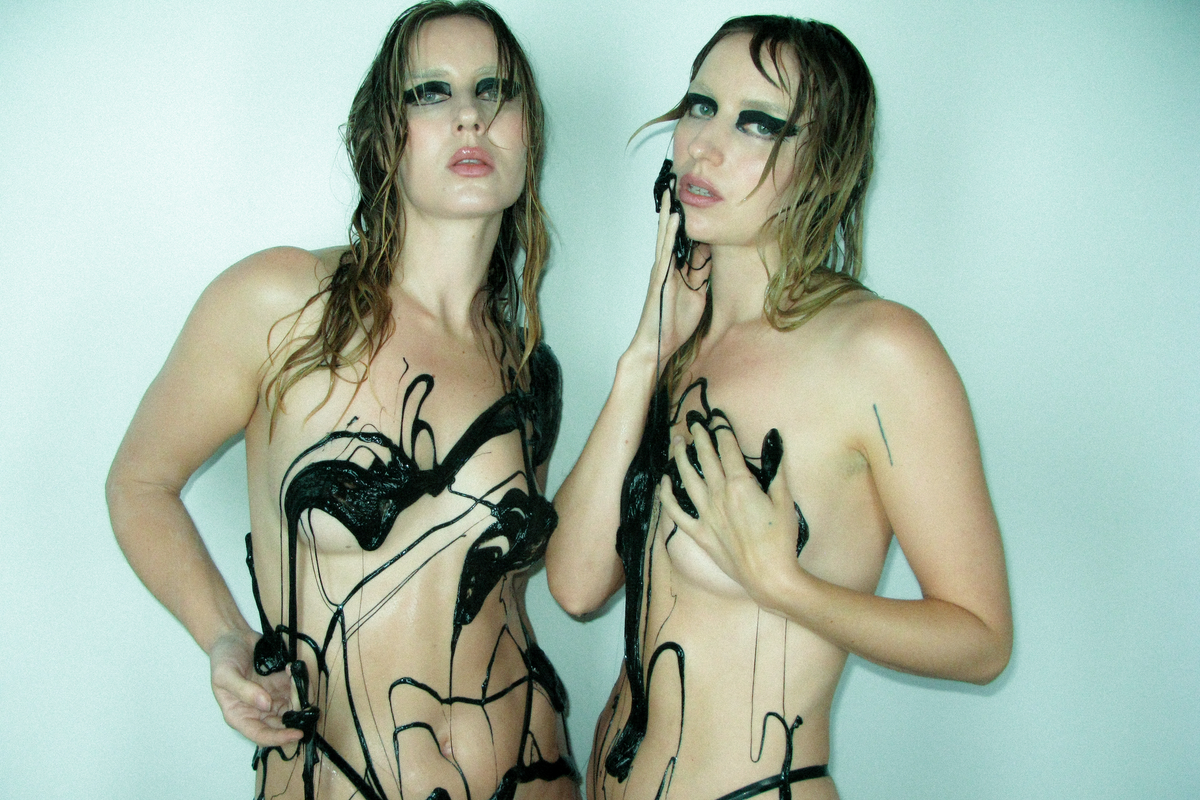
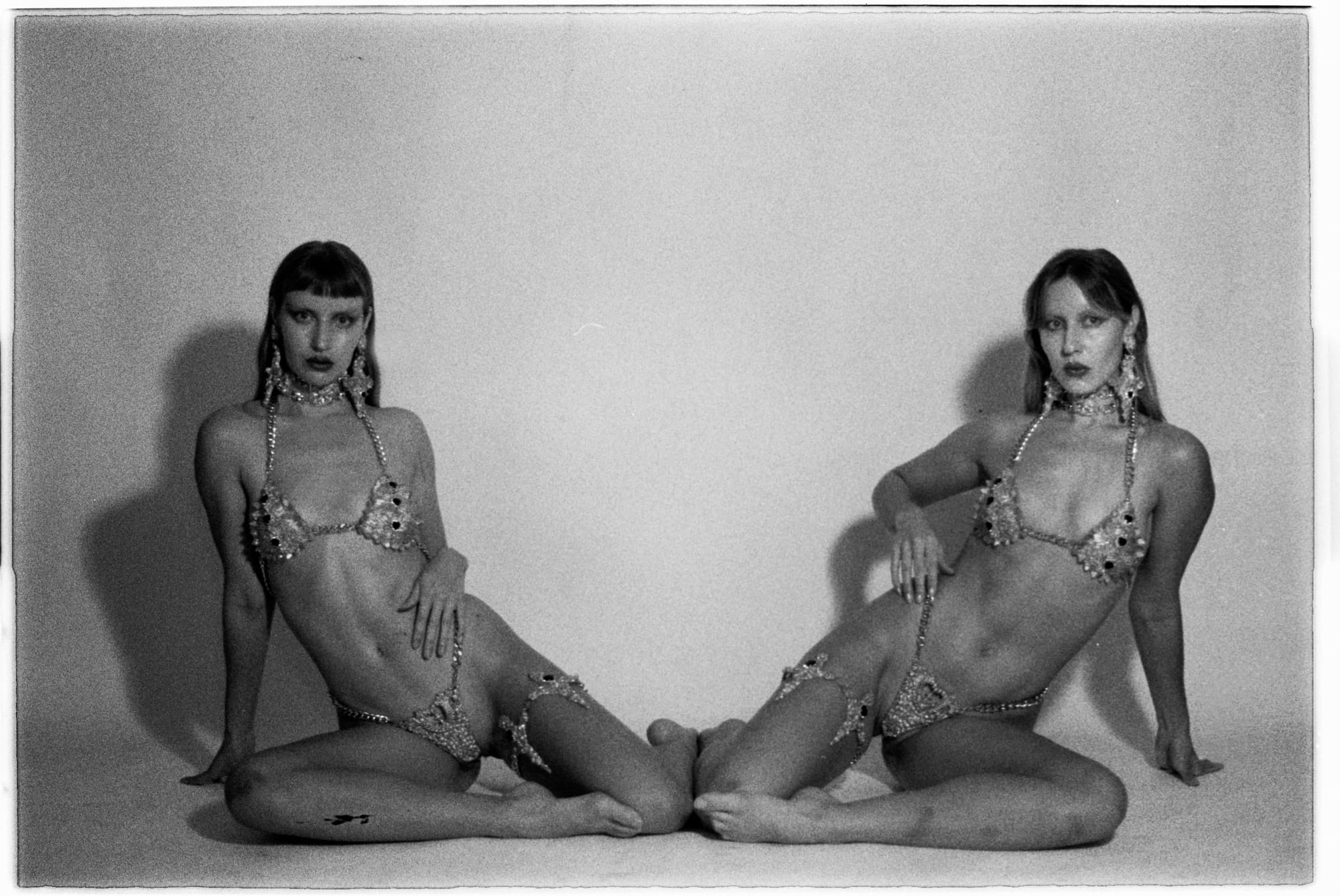
But the name of the movie is also the name of an electro-pop group made of identical twin sisters Elyse and Larena Winn. The pair confront the impossible expectations placed on women and religious hypocrisy through their music and visuals.

The two were initially inspired by their escape from the Mormon church, which Larena calls a cult, and that experience led to a complete deconstruction of identity that allowed for deep introspection and a reclamation of power.
Elyse and Larena were raised in a devout Mormon family with 11 children in Missoula, Montana. Larena says doubt in the church was always present for her and her sister, but, as she says, “they’re really good at making you doubt your own feelings and trust this higher power.”
By high school, both felt like outsiders. Elyse found herself in a relationship with a non-Mormon boyfriend as she started to explore her sexuality. Premarital sex is strictly forbidden in the Church of Jesus Christ of Latter-day Saints. Larena calls it “the greatest sin next to murder.”
The sisters enrolled at Brigham Young University-Idaho at the desire of their parents.
Elyse tried to fit in and soothe her guilt with religion. She attended church and devoutly read her scriptures. She was also, as Larena says, “the most depressed I've ever seen her in my entire life.”
On a random day, Elyse randomly broke the news to Larena: she was moving away.
“We didn't really talk about why,” Larena says. “That's the craziest thing, we're best friends. We're identical twins. We grew up together. But there's this kind of ‘Big Brother,’ people are watching, people are listening and God is hearing this. And you're just afraid to even tell your own identical twin sister what's really happening. And I was afraid to ask.”
Soon after, Larena found herself in a similar position. At 18, after having sex with her boyfriend, she was reported to a bishop under the university’s strict honor code.
In a one-on-one meeting, she says she was subjected to invasive questioning about her sexual history. She was then given an ultimatum: comply with a repentance process, including weekly meetings with the bishop and marriage to her boyfriend, or risk expulsion, loss of scholarships, and forfeited academic credits.
She married him and kept her secret.
“In my head, I was like, ‘I'm never going to leave Montana or Idaho if I don't get an education,’” Larena recalls.
“After I finished college, I had this inkling, this twinkle of, ‘You don't have to keep lying anymore.’ And that's when it really started to crumble,” Larena says.

She reunited with her sister, who had moved to New York City, and gradually began speaking openly about her experiences for the first time. She left both her husband and the church, and came out as bisexual.
After leaving the church, Elyse and Larena questioned everything. That’s when MOTHERMARY took shape.
“Mormonism is certainly the part that forced us to have that paradigm-shifting moment,” Larena says. But it’s only a small piece of what inspires the sisters creatively.
“MOTHERMARY is really inspired by that paradigm shift and waking up to identifying what you truly believe,” Larena says. “It’s also reactionary against any patriarchal, misogynistic societal dogma.”
That skepticism and sense of false praise extends to popular culture and celebrity worship, too.
“MOTHERMARY, in a way, is a tongue-in-cheek way to be like, ‘You all are worshiping so many things, you're blindly following so many societal norms or dogmas or cultures that aren't serving you and aren't serving humanity,’” Larena says.
As artists themselves, they’re in on the joke.
Their 2022 album, I Am Your God, teases this idea of false worship, but it also reveals a larger self-concept: “We believe that the idea of a God is really all of us,” Larena says.
“I'm a God, you are a God. We all are our own God of our existence and we're all connected,” she says. “When we deconstructed religion and came into our own spirituality, that's where we landed in a non-duality sort of sense.”
The result of that realization was their 2025 EP Non-Duality — the spiritual belief that all things are connected.
“Maybe you can find God in a leaf, maybe you can find God in your friend and yourself and in the ways that we create,” Larena says.
Another inspiration behind MOTHERMARY is BDSM.
“I was really drawn towards BDSM because I was like, ‘I don't know how to be empowered. I don't know how to even set boundaries. I don't know how to demand respect,’” Larena says.
“I got to be in control. I got to set the rules and the boundaries. I got to heal through this role-play of getting to fake being powerful. And the thing is, it came so naturally.”
BDSM, Larena says, mimics and makes fun of religious rituals and structures and flips them on their head. Unlike religion, it was empowering.

Larena recalls other women artists who inspired her to leave the church and reclaim independence: Cher, Madonna, Erykah Badu.
“I listened to them, I read about them, I watched their lives and I was like, ‘That's it.’ I both am so inspired by them, and I also want to continue that: the religious deconstruction and the empowerment of women,” Larena says.
“Women who are not ashamed make a lot of people really uncomfortable, and they want you to be ashamed. They want to put you in your place. But I think we have a good amount of people who do get it, and it's healing for them and they enjoy it.”
They also have a good amount of people who are standing up for them on social media, especially following the announcement of the A24 movie.
“I don't know if we could have gotten through it without everyone's support,” Larena says.
“Women feel disempowered. Women are powerless in so many ways in our society — or feel powerless — and I want to continue to transgress that and push against it.”
Hollywood Rebound is an independent journalism publication that celebrates the art behind entertainment. Support the work with a one-time contribution, or share this story with someone who may enjoy it.