
Music
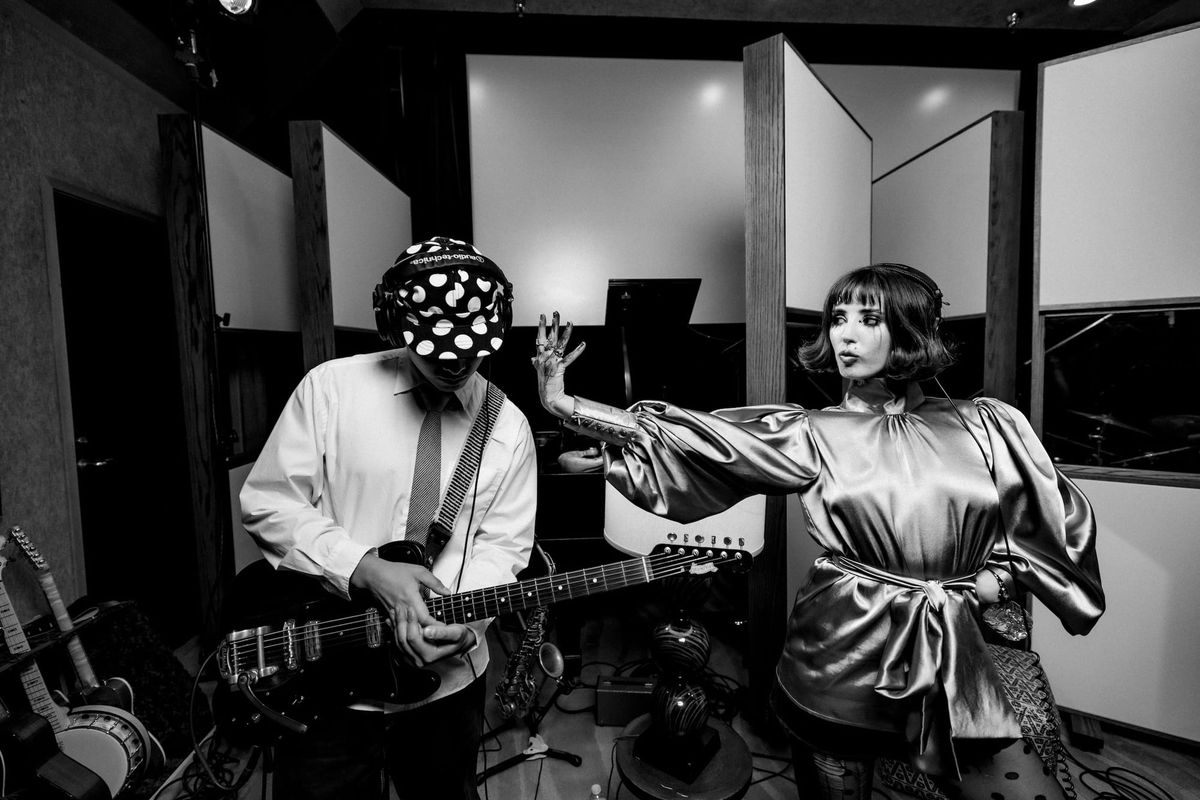
They say print is dead. Not for Annika Rose.
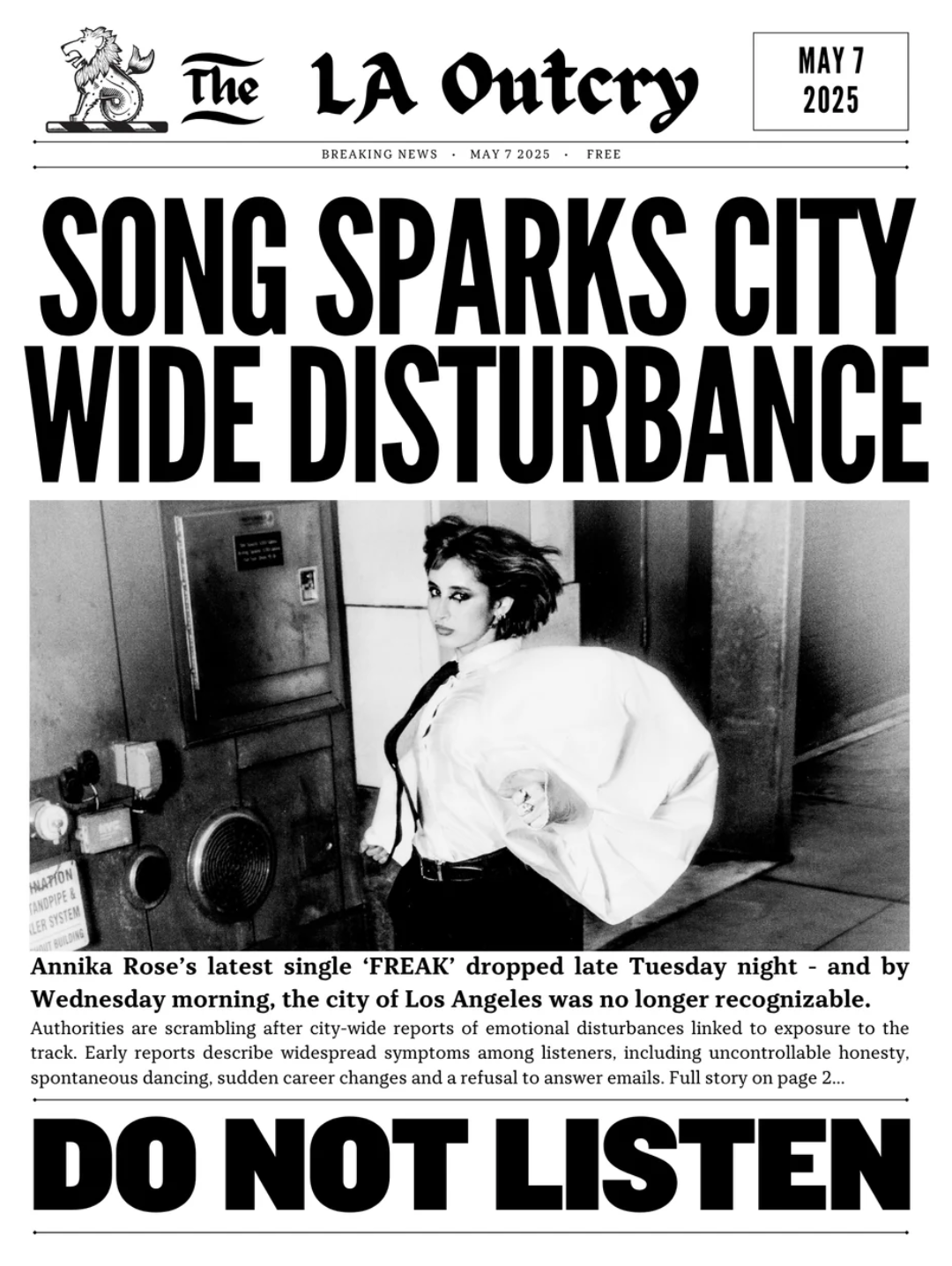
The singer-songwriter prints custom newspapers to promote her music. Then, she and others pass them out on the streets of New York City and Los Angeles to create community and real-life, personal connections between artist and listener.
Rose’s approach challenges the overconsumption era heralded by social media that rewards the content with the catchiest five-second hook. But Rose doesn’t want to make content. She wants to make art.
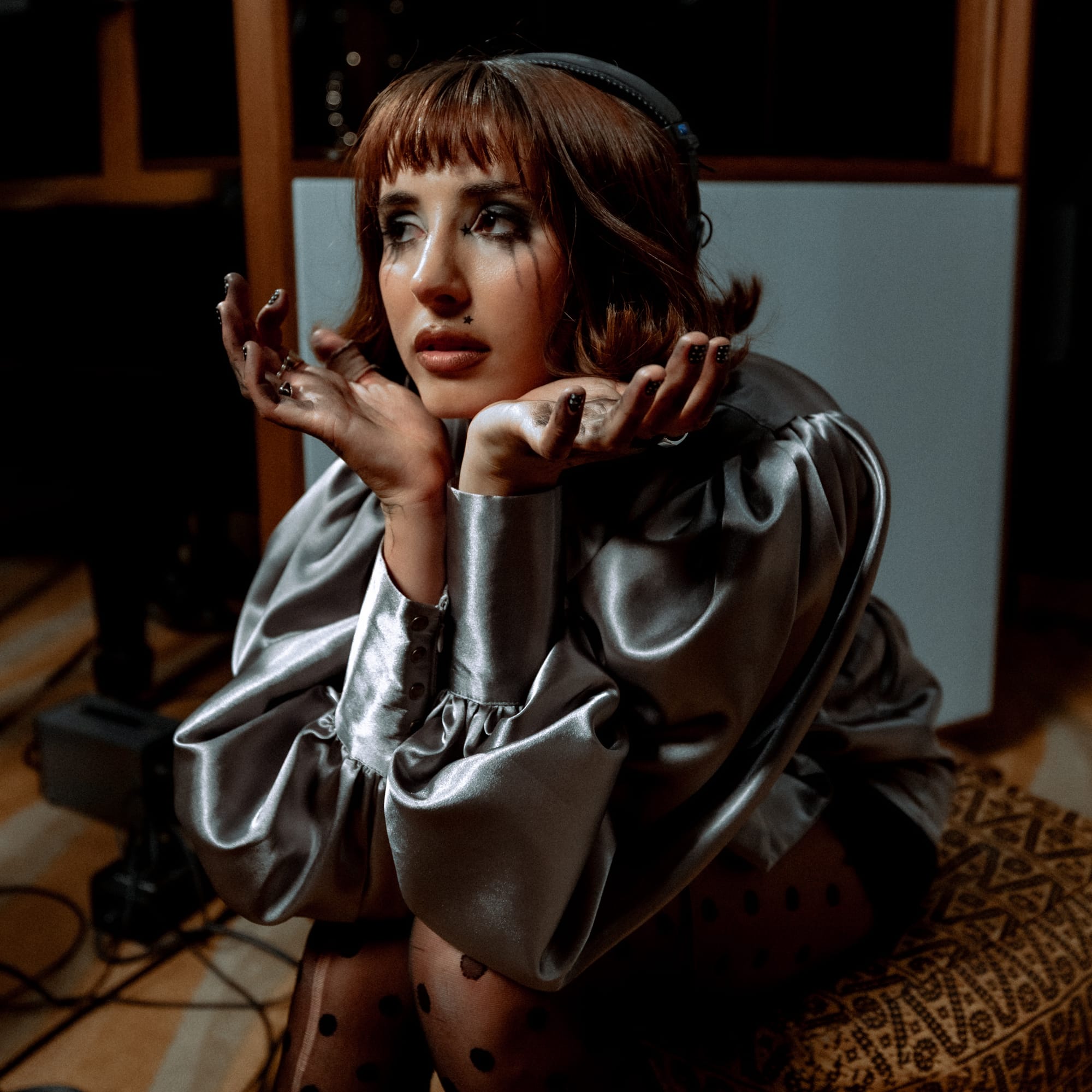
Physical media gives her space to contextualize that art — something that a three-minute song can’t accommodate.
“They go home with it, they take their time with it, they read it, then they listen to the song,” Rose says of the newspapers. “It’s so much more impactful because there's a story there.”
Perhaps above all, Rose made the newspapers so you would slow down.
“Music has become this extremely passive thing,” she says. Contrast that to an art gallery, where the environment begs us to walk a little slower and gaze a little longer.
“If you go to an art gallery and you look at something, a painting on the wall, you stand in front of that painting and you look at the nuance and the detail of the brushstrokes and the color and the texture, and you take your time to appreciate that thing.”
Rose’s latest artistic project to appreciate is a live rendition of her song “I’M GOOD. I’M GREAT.”
“There's a lot of processing that was happening in real time while that song was being made,” Rose says. “The lyrics are very experience-driven, and it wasn't super positive.”
Still, it reached the right people.
“It's been super validating to have other people gather around this shared experience in something, even if the circumstances were different amongst each person,” Rose says. “Just knowing that for every experience that feels as isolating as the one I went through, you're never really alone.”
Rose says the positive response to the song is a product of authenticity — the same authenticity that defines her work.
“I hold full faith and confidence that I show up as I am, and I think that in itself is a success story,” she says.
Rose’s experiences in the music industry — “there's so many people around you who are trying to pull you in so many different directions” — led her to a realization: she’s better off doing things her own way.
Writing in her bedroom. Bringing her own songs into the studio. Creating honest art that can be shared among like-minded people.
All in opposition to how the industry expects artists to act.
“I actually want to stand for shit,” Rose says. “Behind every choice in what you’re visually seeing, there’s a much deeper message I’m trying to communicate.”
Take, for example, her typical uniform: a white button-down shirt with a black tie, and a tiny star on her cheek.
This is Rose confronting the oversexualization of women in the entertainment industry and the executives who abuse their power.
“If a fucking man can show up in the room with a suit and tie, so can I,” Rose says. “I don't need to oversexualize myself to be able to be taken seriously, or to be seen.”
Now, Rose is finishing an EP, and yes, there will be newspapers.
“I want to throw a fucking release party/live video shoot/show in a newspaper printing facility and curate an entire space where it's filmed, but it's live,” Rose says. “And there's an audience that just sits in this facility, and I just put on this insane intimate show while there's literal newspapers being printed behind me.”
Extra, extra. Read all about it. Then, listen to the music.